
Summarized from:
Fabrizio Pregadio, The Taoist Tradition: An Introduction to Teachings, Schools, and Practices
Golden Elixir Press
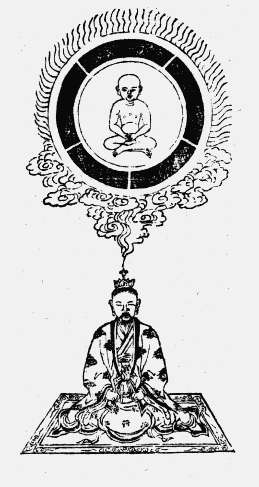
Three main terms define the traditional Chinese views of the human body. The first, ti or "body," designates the physical frame as an ordered whole made of interdependent parts. The second, xing or "form," is especially complex; it should be understood in contrast to the idea of “formlessness” (wuxing), which is a feature attrivuted to the Dao. "Form," from this point of view, refers to the embodiment as the feature that identifies each entity in the "world of form", distinguishing it from — but also relating it to — all other entities. The third term, shen or "person," denotes the whole human being, including non-material aspects ranging from thinking and feeling to personality and function in society.
 For more details on these terms, see Chinese Terms for "Body".
These terms show that the Western notion of "body" as physical structure is inadequate to convey the complexity of the Chinese views. The Taoist views are further enriched by significant varieties among different traditions. In the absence of a single way of seeing the body shared by all Taoist traditions, this article outlines some of the main themes that emerge from different contexts.
Body and State
If in governing oneself one is fond of one’s breath, the person will be whole; if in governing the country one is fond of the people, the country will be secure. Governing oneself means to inhale and exhale essence and breath (jing and qi), without letting the ears hear them; governing the country means to distribute virtue (de) and spread compassion (hui), without letting one’s subjects know it.
The human body and the state are two microcosms related not only to the macrocosm but also to one another. (See Macrocosm and Microcosm in Taoism.) The body is often described with bureaucratic metaphors, and governing the state is often likened to self-cultivation. This analogy runs throughout Heshang gong's commentary to the Daode jing (see the inset for an example) and is restated in later texts.
At the center of the bureaucratic metaphor are the five viscera (wuzang), described as "offices" (or "officers," guan) in both Taoist and medical texts.
Body and Cosmos
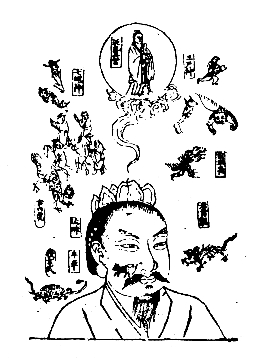
Laozi transformed his body. His left eye became the Sun, his right eye the Moon. His head became mount Kunlun; his hair, planets and constellations. His bones became dragons; his flesh, wild beasts. His intestines became snakes; his belly, the sea. His fingers became the five sacred mountains; the hair on his body, tree and grasses. His heart became the Flowery Canopy (i.e, the Cassiopeia constellation); and his kidneys, joining to each other, became the True Father and the True Mother of humanity.
Taoism adds much to the theory of the correspondence between cosmos and human body, beginning with descriptions that focus on Laojun or Lord Lao the divine aspect of Laozi. According to the Laozi bianhua jing (Book of the Transformations of Laozi), the Kaitian jing (Book of the Opening of Heaven), and other texts, Lord Lao already exists at the beginning of the formation of the cosmos and reappears throughout human history, transforming his body each time (the "historical" Laozi is only one of those transformations). In other instances, the cosmos itself is seen as the body of Laozi, a theme that appears to have originated in early myths concerning Pan Gu, the Chinese "cosmic man". A description of the cosmic body of Laozi is found in a Buddhist polemical text, the Xiaodao lun (Essays to Ridicule the Dao; see inset).
The Body as Residence of Gods and Spirits
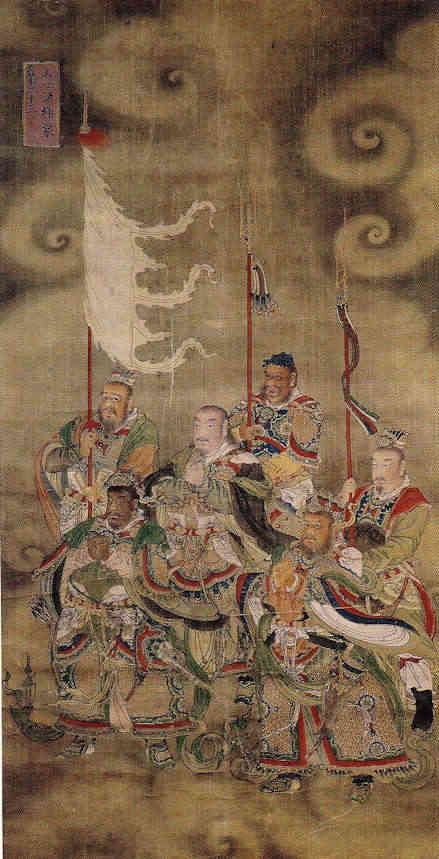
The spirits of the five viscera (liver, lungs, kidneys, heart, and spleen) have a human shape and the texts provide details on their names, heights, clothes, and functions. Since the earliest descriptions, found in the Taiping jing (Book of Great Peace), these details are provided as support for meditation: visualizing and nourishing the inner gods causes them to stay in their corporeal abodes and perform their functions, while their departure would result in illness and death. Extended descriptions of the inner deities are found in the Huangting jing (Book of the Yellow Court) and especially in the Laozi zhongjing (Central Book of Laozi), and were later developed by the Shangqing branch of Taoism. The Huangting jing describes the gods of the five viscera and of the niwan, the upper Cinnabar Field (dantian) located in the region of the brain. The Laozi zhongjing features a group of deities who dwell in different regions of the human body, all of whom are different forms taken by the Great One (Taiyi). In both texts, the deities of the viscera perform administrative functions within the body.
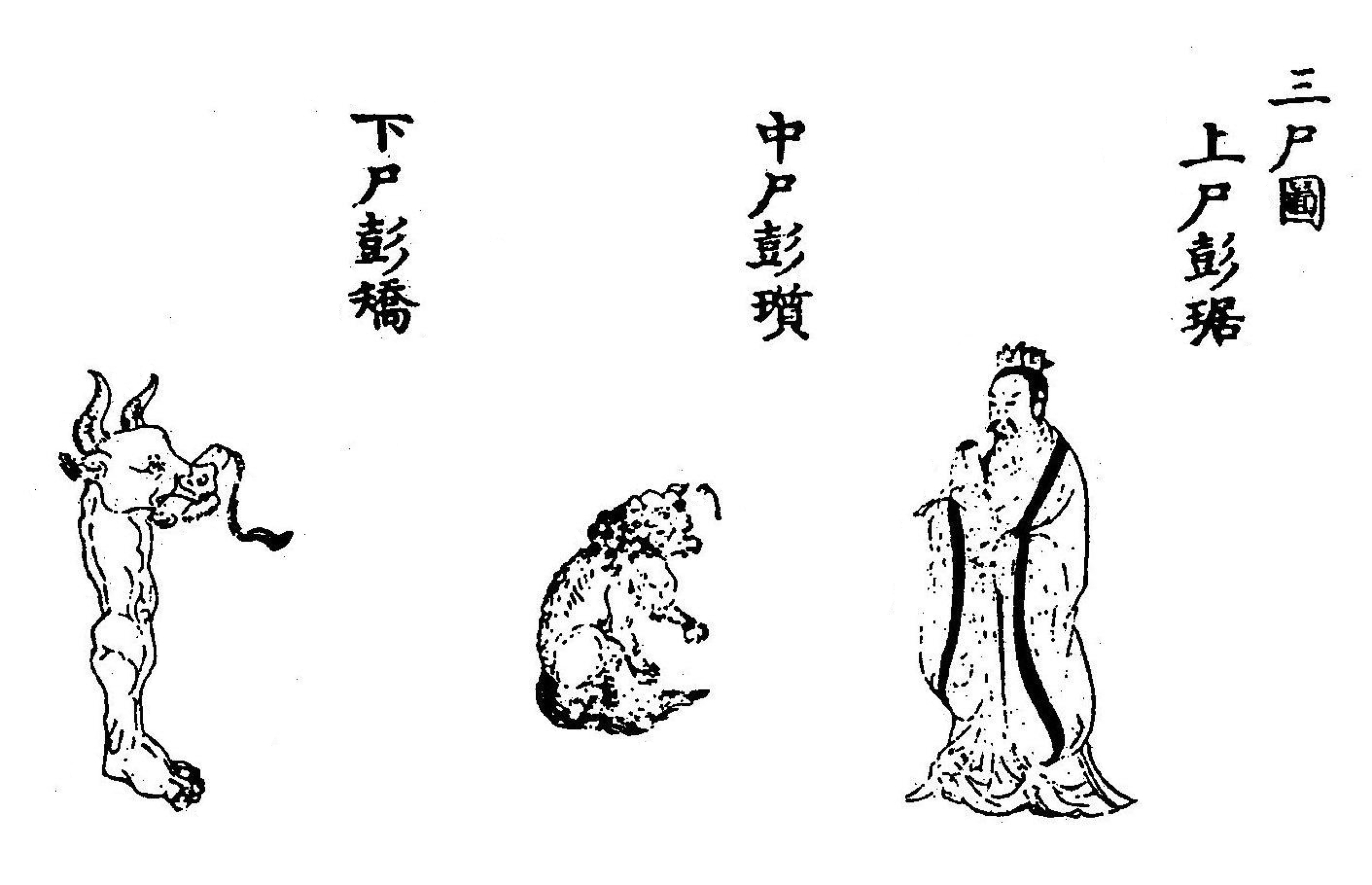
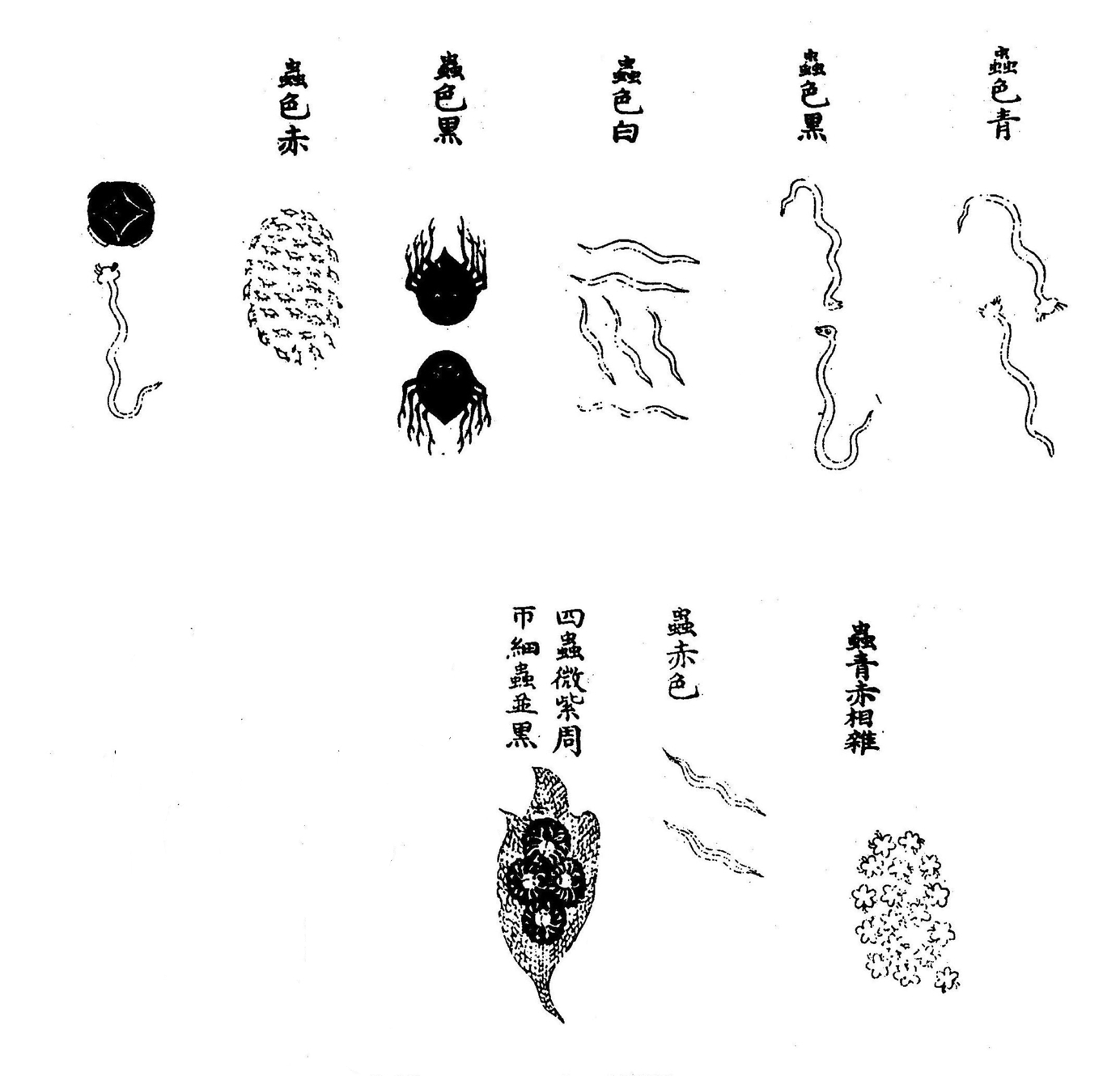
In other instances, the viscera are the seats of impersonal spirits. According to the Heshang gong commentary and to medical texts, the hun "soul" (representing the Yang components of the human being), the po "soul" (representing the Yin components), the essence (jing), the spirit (shen), and the Intention (yi) reside in the liver, the lungs, the kidneys, the heart, and the spleen, respectively. Elsewhere, hun and po are represented in a deified form; in this case, the hun are said to number three and the po seven. They are often mentioned with the "three corpses"" and "nine worms"" (sanshi and jiuchong), malevolent spirits who report the faults of the individual in which they dwell to the Admistrator of Destinies (Siming). Accumulating merit through good actions, abstaining from cereals, and performing rites on the gengshen day (the 57th of the sexagesimal cycle) were among the methods used to neutralize them.
The Body as Mountain and Landscape
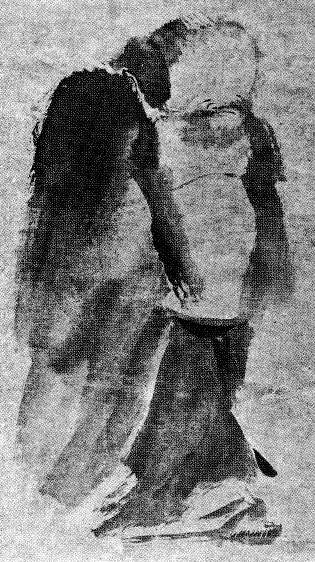
The Wushang biyao (Supreme Secret Essentials, ch. 41) associates the Authentic Talismans of the Five Emperors (wudi zhenfu) with the five planets in heaven, the five sacred mountains on earth, and the five viscera in the human body. The body itself is often represented as a mountain. Liang Kai (13th century) painted a famous scroll that depicts an immortal — possibly meant to be Laozi himself — as a mountain, using the technique normally applied for painting landscapes. Images of the body as a mountain are also found in Taoist texts (see an example). They illustrate loci in the body that are important for the practices of Nourishing Life (yangsheng) and Internal Alchemy (Neidan). Some of these sites are represented as palaces that function as headquarters for the administration of the inner body: here too the metaphor of the government of the country as the government of the body is apparent. In turn, the visual depictions of the body as a mountain are related to the best-known Taoist image of the inner body, the Neijing tu (Chart of the Inner Warp), which maps the body as a landscape whose features (e.g., the watercourse, the mill, the furnace) have symbolic meanings in Neidan.
The Body in Internal Alchemy
With regard to the human body, one's own body is a whole Heaven and Earth, and also contains the Sun and the Moon. The body is Heaven and Earth; Water and Fire are the ingredients; and the cyclical movements of the Sun and the Moon are the Fire Phases.
The Neidan view of the body is complex, and remarkable differences occur among various subtraditions and authors. In general, the main components of the Internal Elixir (Essence, Breath, and Spirit, or jing, qi, and shen), as well as the tripod and the furnace, and even the fire, are said to be found within the human being. Beyond this basic premise, Neidan shares some of the views outlined above and dismisses others. For instance, it inherits from traditional medicine the importance of the Control and Function channels (dumai and renmai, in the back and the front of the body, respectively) that play a central role in the circulation of Essence. On the other hand, Neidan practice does not involve visualizing the inner gods.
The Taoist Tradition: An Introduction to Teachings, Schools, and Practices
A concise but comprehensive introduction to Taoist thought and religion
Neidan, however, is more than a technique, and the importance it gives to immaterial notions such as Nature and Existence (xing and ming), or inner Nature and individual qualities (xing and qing), shows that its main focus is not, or not exclusively, the physical body. Various concepts and practices take on different meanings at different levels, from the physical to the spiritual and beyond this distinction. An example is the Mysterious Barrier (xuanguan), which according to different authors is located between the eyebrows, between the kidneys, in the gallbladder, in the navel, or elsewhere, while others say it has no precise location in the body. As Li Daochun (fl. 1288–1306) remarks: "The Mysterious Barrier is the most mysterious and wondrous pivotal pass (jiguan). How can it have a fixed position? If you place it in the body (shen), this is not correct. If you separate it from the body and search for it outside the body, this is also not correct".
© Golden Elixir Press