
Summarized from:
Fabrizio Pregadio, The Taoist Tradition: An Introduction to Teachings, Schools, and Practices
Golden Elixir Press
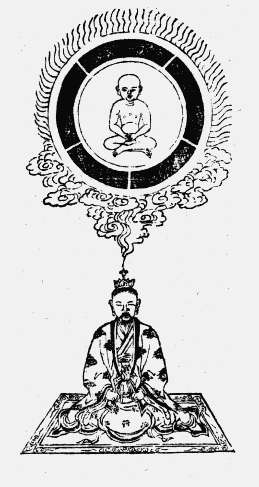
Despite significant differences among the different traditions, the basic view of the human being and its potentialities in Taoism reflects its doctrinal principles. Many texts devoted to this subject state that full comprehension of their teachings grants the status of Realized Person, or Perfected (zhenren). The related practices do not consist in a process of "increase" or "becoming perfect" but rather in reducing what obstructs one's potential for realization; this accords with the principle of the Daode jing that "for the Dao, one decreases day by day; decrease and then again decrease until there is no doing" (sec. 48). Some authors of Neidan (Internal Alchemy) texts have been aware of the ambiguity involved in the very notion of "doing" a practice in order to attain the state of "non-doing," and have emphasized that the practice operates within the domain that the adept is called to transcend; its final purpose is to reveal the limitations of that domain.
Main Loci
The heart (xin) is the symbolic center of the human being. It is the residence of spirit (shen) and corresponds to the Northern Dipper, placed at the symbolic center of the cosmos. But just like Unity takes multiple forms in the cosmos, so does the center of the human being reappear in multiple locations. The most important ones are the three Cinnabar Fields (dantian, immaterial loci in the regions of the brain, the heart, and the abdomen) and the five viscera (wuzang, namely liver, heart, spleen, lungs, and kidneys). The three Cinnabar Fields and the five viscera represent the vertical and horizontal dimensions of the cosmos, respectively. within the human being.
Practices
The Taoist Tradition: An Introduction to Teachings, Schools, and Practices
A concise but comprehensive introduction to Taoist thought and religion
According to some Taoist traditions, these and many other loci of the body are also residences of a pantheon of major and minor inner gods. The most important among them correspond to those that live in the heavens, and perform multiple related roles: they personify the formless Dao or impersonal notions such as Yin and Yang, allow the human being to communicate with the gods of the outer pantheon, and administer the body and its functions. Early texts describe meditation practices where the visualization of inner deities is combined with the circulation of bodily essences, in order to deliver them to the residences of the inner gods and provide them with nourishment. From the Tang period (7th to 9th centuries) onwards, those practices were largely replaced by other methods of contemplation and introspection influenced by Buddhism. The inner gods, however, have continued to perform an important function in ritual, when they are summoned forth by the priest in order to submit the "memorial"The "memorial" (or “statement”, shu) is addressed to the gods in order to announce the ceremony performed in their honor, declare its purpose, specify its program, and list the names of those who sponsor it. to the gods in Heaven.
[The sainly man] has forgotten his five viscera and has abandoned his bodily form. He knows without apprehending, sees without looking, accomplishes without doing, and discerns without applying himself. He spontaneously responds to the outer stimuli and acts only if he cannot avoid it.
Neidan, or Internal Alchemy, framed its practices in part by drawing from meditation methods and from the techniques for "nourishing life" (yangsheng). The latter term refers to a large variety of methods that share a physiological foundation, including daoyin (a form of gymnastics that is one of the precursors of modern taiji quan), breathing, and sexual practices. However, using the same word that other sources apply to the cults of popular religion, Neidan texts often qualify the techniques of "nourishing life" as "secular" or "vulgar" (su), or criticize them in other ways: like other traditions within Taoism do with regard to deities and rites, alchemy incorporates elements of those techniques but grafts them onto its own doctrinal framework.
In Neidan and other Taoist traditions, the purpose of the practice is to acquire transcendence or "immortality." In religious imagery, in both its mystical and popular aspects, "immortality" is a state attained by superior beings, often entirely legendary, through their practices. For others, "immortality" consists in undergoing transformation, in the literal sense of "going beyond the form."
© Golden Elixir Press