
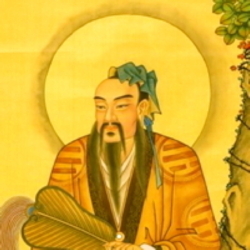
Wang Chongyang was the founder of the Northern Lineage (Beizong) of Neidan. Also known as Wang Zhe, he apparently led a rather turbulent life until 1159, when he is said to have met Zhongli Quan and Lü Dongbin (two illustrious Taoist immortals) and to have become an ascetic. From 1167, he begun preaching with his followers in the northeastern province of Shandong. In the strict sense, the Northern Lineage consists of Wang Chongyang and his seven main disciples, among whom Qiu Chuji (1148–1227) is the most important for the later history of Neidan.
While there are reasons to doubt that the Fifteen Essays to Establish the Teaching, which combines doctrinal teachings and advice on lifestyle, is actually Wang Chongyang’s own work, it is nevertheless deemed to be an original Beizong/Quanzhen document.
 These selections are quoted from:
A complete translation of the Fifteen Essays is also found in:
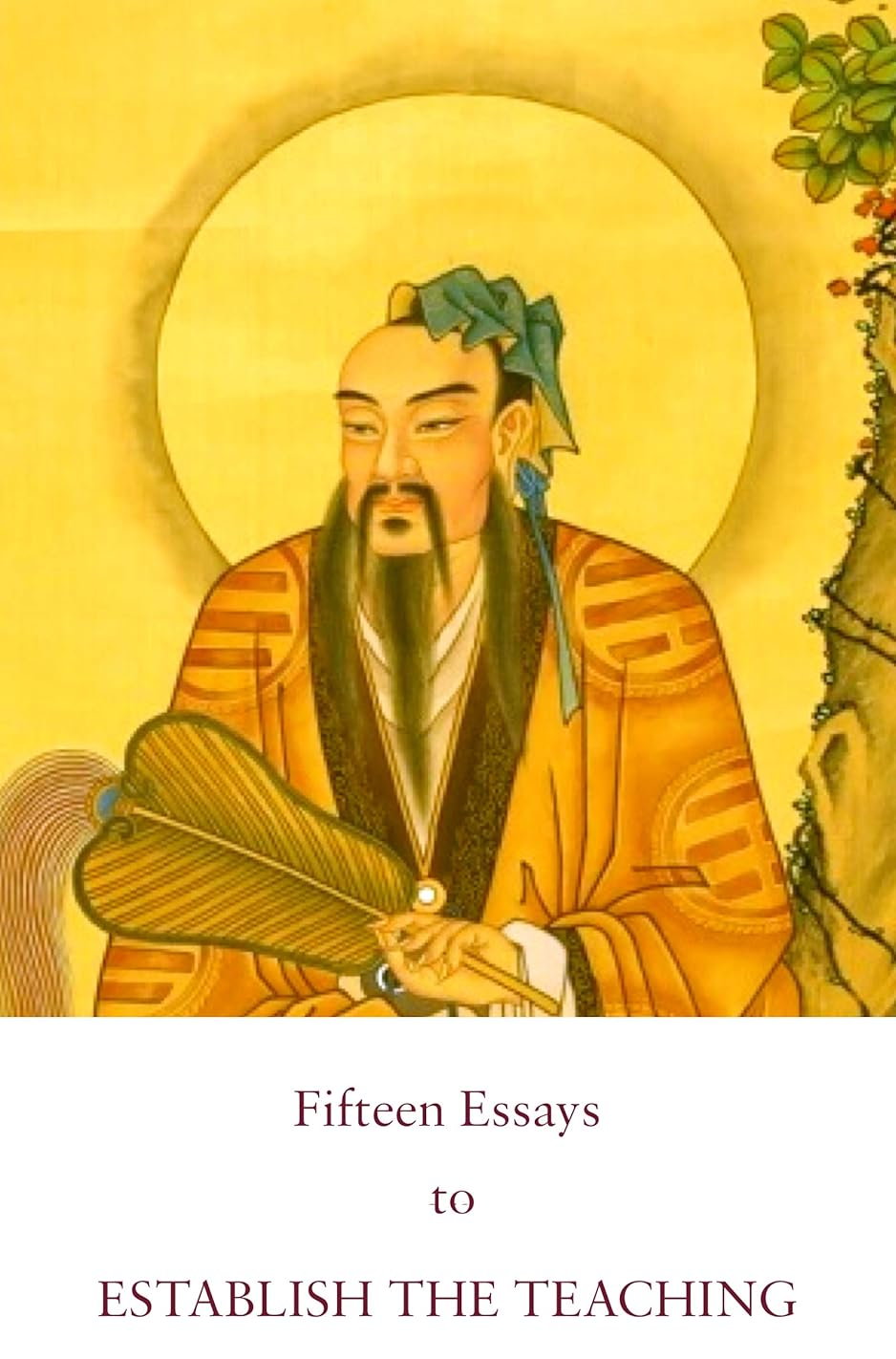
Fifteen Essays to Establish the Teaching: A Founding Text of Complete Reality Taoism
Golden Elixir Press (Kindle edition)
(7) Sitting
“Sitting” does not mean sitting with the body upright and the eyes closed. That is false sitting.
In true sitting, during the twelve [double] hours, whether you are standing, walking, sitting, or lying down, and in all states of movement or quiescence, your mind should be like Mount Tai: motionless and unshaken. Shut the four gates—eyes, ears, mouth, and nose—and do not let any external condition enter. If there is even the slightest thought of movement and quiescence, it cannot be called “sitting in quiescence.”
Taoist Internal Alchemy: An Anthology of Neidan Texts
Translations of sixteen important works from the Taoist tradition of Neidan, or Internal Alchemy
Those who can do this may dwell with their bodies in the world of dust, but their names are already recorded among the ranks of the Immortals. They do not need to call on far-away people, as they are worthies and sages within themselves. In one hundred years, when their work is completedOr: “when their merit is completed.” Gong 功 means both “work” and “merit” — in this case, the merit that derives from the practice., they will shed their shells and ascend to Reality. When they achieve the pill of the Elixir, their Spirit will roam throughout the eight poles.
(15) Leaving the Ordinary World
Leaving the ordinary world does not mean leaving it with one’s body: it refers to the mind ground (xindi). The body is like a lotus root, the mind is like a lotus blossom: the root is in the mud, the blossom is in the open air. For one who attains the Dao, the body is in the ordinary word, but the mind is in the realm of the sages.
Nowadays, people want to avoid death forever and leave the ordinary world. They are truly foolish: they do not understand the principle of the Dao.
© Golden Elixir Press